Post-sorting recovers more plastic, but at the expense of quality
How does the quality of plastic packaging recovered from mixed household waste compare to that of plastics sorted by consumers, such as through the PMD bag? A recent study by researchers from Ghent University, Maastricht University and FAU Erlangen-Nürnberg provides new insights. The team compared key aspects such as contamination, fraction purity, odour and the quantity of plastics that can be recovered.
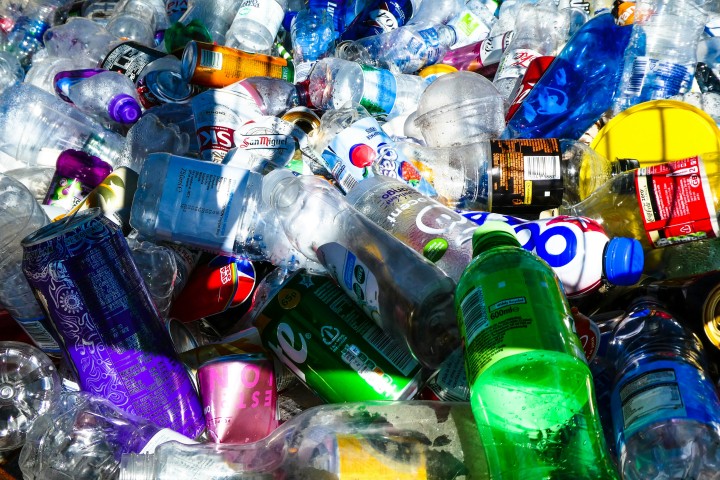
In many countries, plastic packaging is not collected separately, but together with mixed household waste which is then sorted afterwards. These post-sorting systems typically mean that less plastics actually get recycled, even below 15% in countries such as China, Brazil and Australia.
In Belgium, the Netherlands and Germany, where consumers actively sort their packaging waste (e.g. through the PMD system), significantly higher recycling rates are achieved, exceeding 50%. However, these systems also have their drawbacks. Due to sorting mistakes and non-participation of consumers, a considerable proportion of recyclable plastics still ends up in residual waste and is not recovered.
This raises the question: which approach is the most effective? Should plastics be collected separately, or together with household waste and sorted afterwards?
Central trade-off: quantity versus quality
The study reveals a central trade-off for circular plastics: the balance between quantity and quality. While post-sorting can help recover more plastic packaging, its quality is often lower. Compared to plastics collected through the PMD system, post-sorted plastics in general contain more contamination, have stronger odours, and can include higher levels of metals.
However, the researchers argue that post-sorting could still play an important role. By recovering plastics that would otherwise be lost in residual waste streams, it can help increase overall recycling rates. This is particularly relevant considering the new European Regulation (2025/40), which sets minimum targets for recycled content in plastic packaging by 2030, ranging from around 10% to 35% depending on the type of packaging.
At the same time, implementing post-sorting at scale would require significant investments, as additional cleaning is needed to remove contaminants and odours. The researchers therefore conclude that post-sorting should not replace systems such as the PMD bag but rather complement them.
Moonshot and the CLARIFY project
To support the transition towards a climate-neutral Flemish industry, Moonshot Flanders is also advancing innovation in plastic waste recycling. For instance, earlier this year, the CLARIFY pilot installation was inaugurated at the Laboratory for Circular Process Engineering (LCPE) of Ghent University.
Funded through the Moonshot programme, the pilot plant enables testing of advanced mechanical recycling, dissolution recycling, and other innovative material‑processing routes and aims to minimise upscaling challenges before industrial implementation. One key innovation of the CLARIFY facility lies in the advanced recycling of thin flexible plastics (bags, wrappers, and multilayer films), which are notoriously difficult to recycle at high value.
Read the scientific article here:
Analysis of trade-offs of post-sorting plastic packaging
Schmuck, A., Belé, T. G. A., Withoeck, D., Van Geem, K. M., Ragaert, K., & De Meester, S. (2026). Analysis of trade-offs of post-sorting plastic packaging. Nature, 654(8118), 383–390. https://doi.org/10.1038/s41586-026-10606-4
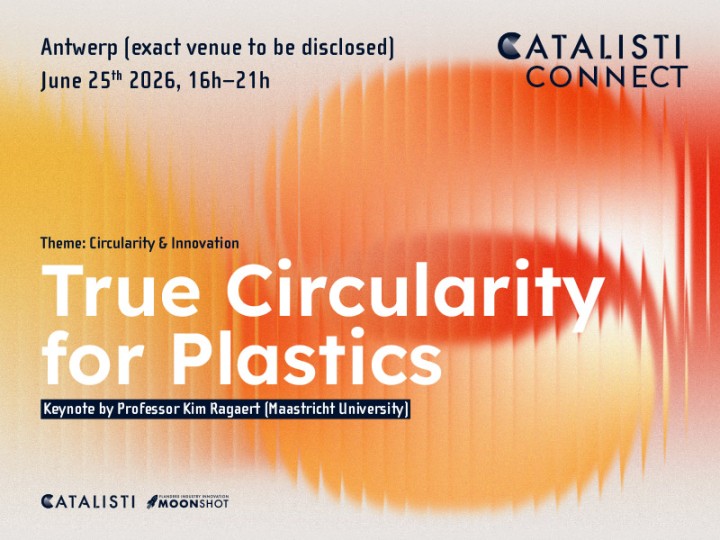
Let's connect on circular plastics
Want to learn more about the circularity of plastics? Join us at Catalisti Connect on 25 June in Antwerp, and gain insights from one of the researchers behind the study, Professor Kim Ragaert, on how we can build a truly circular plastics ecosystem.